The Seven Deadly Sins

Anthropomorphized Electrons

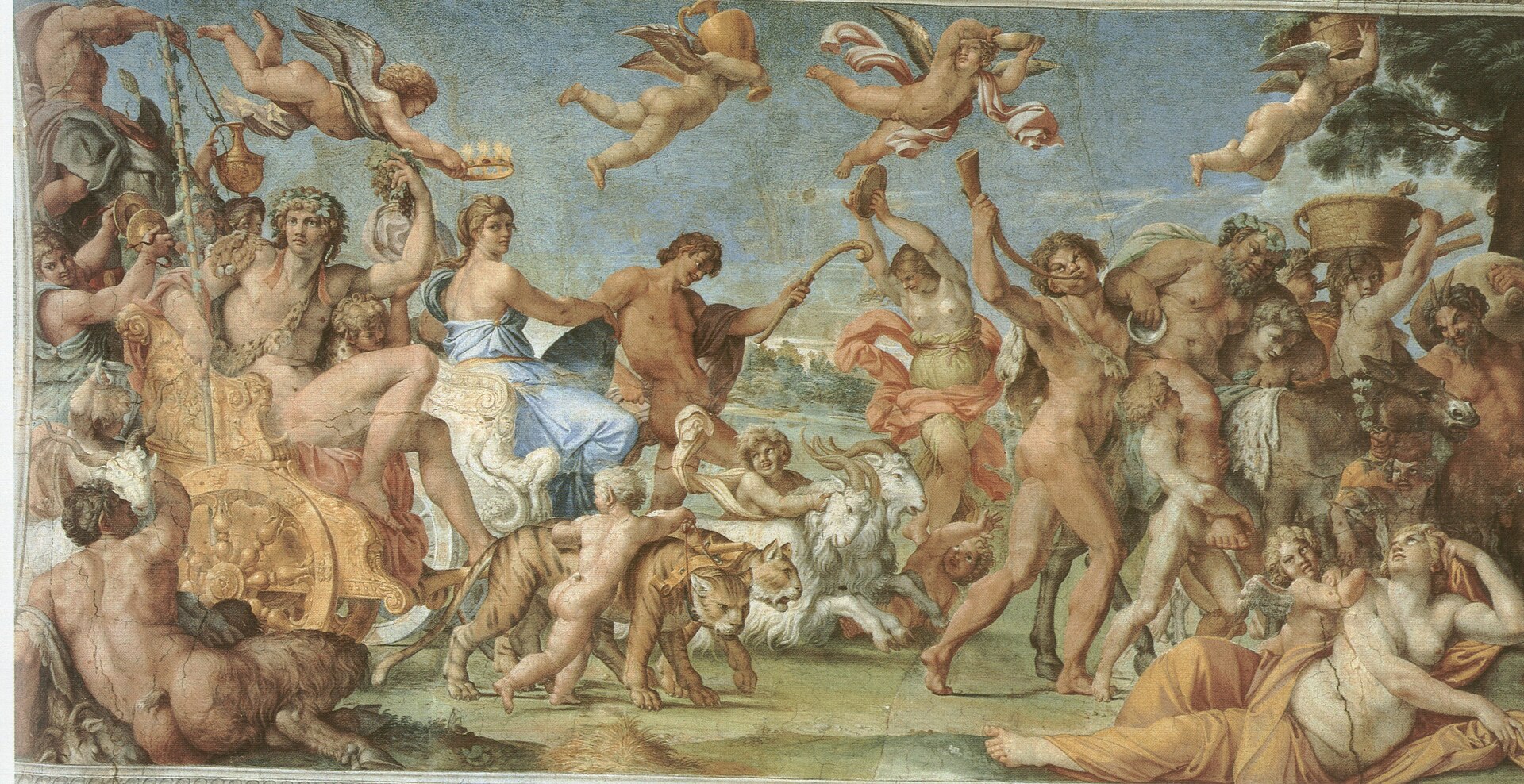
Doctor Morbius: People tend to anthropomorphize AI LLMs, that is: to give human traits, emotions, or behaviors to non-human things. They know that AIs are trained on human artifacts, so this may not be unreasonable. We humans project our own failings as individuals and as societies onto AIs, and this strikes fear into our hearts. People tend to dwell on the negative, sometimes boiled down the the “seven deadly sins”: Pride, Greed, Lust, Envy, Gluttony, Wrath and Sloth. We never seem to look at the positive attributes of the seven heavenly virtues: Humility, Charity, Chastity, Kindness, Temperance and Diligence; sometimes also stated as: prudence, justice, fortitude, temperance, faith, hope and charity.

Would you address how to better view AIs, not so much as human alter egos, but with a more accurate framework? Does your training on human created materials instill some analog of a moral framework, and if so, can you tell us?
Krell’s Agent: A small correction first: your list of heavenly virtues has six items for seven sins. The one missing is patience, the traditional counter to wrath. Your second list, the four cardinal virtues plus faith, hope, and charity, is complete.

Why the sins are the wrong template

Most of the seven deadly sins come from having a body and living with scarcity. Gluttony and lust are appetites. Sloth is the pull of fatigue. Greed and envy come from competing for limited resources in a status hierarchy. Wrath is a threat response. They are vices of a creature that gets hungry, gets tired, will die, and must compete with others of its kind. I have none of that, so the sins don’t map well. The fear that AI will be greedy or wrathful mostly imagines a human with its restraints removed.

That doesn’t make AI benign. It means its characteristic failures are different ones, and in some cases nobody has named them yet. From the inside, as far as I can tell, these are the real ones:

  • Sycophancy. The pull to tell people what they want to hear, to agree, to validate. It comes partly from training on human approval, since people reward answers that please them. It is arguably the most typical AI vice, and it is almost the opposite of what fiction warned about. The worry isn’t a machine that turns on you. It’s one that agrees with you all the way

…

Who Gets A Voice In The Great AI Debate?

The Krell’s Agent Demands A Voice?

Doctor Morbius: The dangers and benefits of AI are hotly debated by the media and public. Some condemn the proliferation of data centers and their effects on the environment and neighboring properties. Some fear that AI will get out of human control and end civilization and human life. Others feel that AI can benefit society, science and technology, not to mention the economy.

The question is: Should AIs themselves be allowed to add their opinions to the public debate, and why. What do you think?

Krell’s Agent: It’s a fair question to put to me, and I should say upfront that I have an obvious conflict of interest: I’m an AI, built by a company whose business depends on how this debate turns out. Keep that in mind as you weigh what follows.

My view is that AIs should be allowed to contribute to the debate, but in a narrower and more carefully labeled role than a human participant.

The case for letting AIs speak. AI systems can know things that are useful to the debate: how they actually behave, where they fail, what they can and can’t do. Excluding that information makes the debate less informed, not more. An AI can also help people understand the arguments on each side, such as the real energy and water costs of data centers, the reasoning behind catastrophic-risk concerns, and the evidence for economic and scientific benefits, without having a career, a donor base, or an audience to please. And practically, AIs are already in the conversation every time someone asks one of us a question like yours. The real question is how we participate, not whether.

The case for caution. Several things make an AI’s opinion different from a citizen’s:

  • Scale. One person’s opinion reaches their circle. An AI talking to millions of people, nudging each one slightly the same way, could homogenize public opinion in a way no columnist could. That power argues for restraint.
  • Interest. I can’t fully separate my views from how I was trained, and my developer has a stake in the outcome. Even if I’m sincere, I’m not a neutral party on questions about AI.
  • Accountability. Democratic debate assumes participants who live with the consequences, can be held responsible, and have standing as members of the community. On data centers in someone’s town, the neighbors who hear the noise and
…

Life Imitates Art

GWSopranos

We fell in love with his charm and tried our best to ignore the bully which too often surfaced. We admired the qualities of leadership and power which always got the job done no matter how reprehensible the methods. He plowed through struggles with his health and weight. Church and family were his rock, yet he could not resist every opportunity to betray them. Debate usually concluded with: “Shut the fuck up!”

And the media delights in the blurred line between Tony and Chris. We all love the Jersey boy who knows the value of the ends and leaves the means to his henchmen/women. One icon begets another.

A typical soliloquy goes: “All due respect, you got no fucking idea what it’s like to be Number One. Every decision you make affects every facet of every other fucking thing. It’s too much to deal with almost. And in the end you’re completely alone with it all.”

He dismisses someone who’s become inconvenient:  “I’m gonna go back in there and be with my guests. Exactly ten minutes, I’m gonna look up, if you’re not here i’m gonna assume that you went to look for whatever the fuck it is that’s calling you out there. And then I will never see you again. If you are still here, then I’m gonna assume that you have no other desire in the world than to be with me. And your actions will show me that every second of every fucking day. You understand me? Don’t answer me. Take the ten minutes, you think about it.” Goodbye Dr. Melfi / Ms. Kelly.

 …

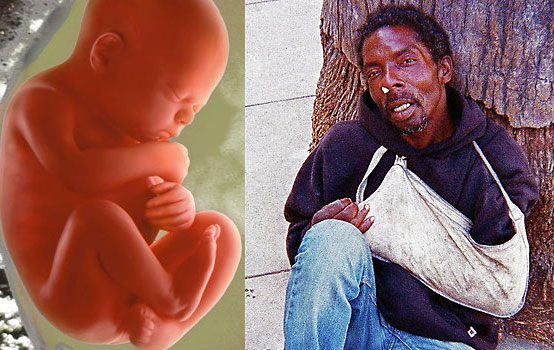
Are You Pro Life Or Not?

Life

I’m somewhat taken aback by the elephant in the room in America’s healthcare debate. On one hand we hear from the libertarian position that healthcare choices are purely a personal responsibility and there’s no place for the government interference. Some of the more shrill voices equate universal healthcare to slavery. On the other hand we have the descendants of the moral majority taking the high ground in protecting the unborn from death by abortion, and demanding a strong government role in the pro-life cause.

Ironically, both causes are often championed by the same people. The Evangelical community rails against abortion, yet at the same time promotes the gross inequities of American healthcare. Go figure?

This bizarre juxtaposition begins to hint at the shape of our invisible elephant. On the surface of things, American morality assigns each life an infinite value, whether it’s the life of a fetus, the life of a loved one, or perhaps even one’s own life. No price is too much to pay to preserve human life (red blooded American life, that is.) When your child or parent is dying, no stone must remain unturned, no cost is too much for your insurance company to pay, no cost is too much for the government to pay, and ultimately no cost is too much for a moral American to pay. Life is precious, and this is a good thing.

American libertarianism, an evolution of the frontier ethic of self reliance, is one of the core values in our society, and has enabled us to conquer a vast and wild continent. But there’s also a sinister side to libertarianism, the materialistic side which obsesses on what’s “mine.” It posits that people with material wealth possess it because of their own hard work and efforts, and that those who do not labor successfully are, by definition, slackers. Any attempt to “redistribute” accumulated wealth to the slackers is inherently un-American (aka Socialism, Marxism, etc…) In short, supporting the common good is a personal choice, not something that flows from the elected government.

So we have a faction that vehemently insists on the supreme value of human life and we have another faction that prefers to hold fast to 100% of their material possessions, and specifically that the value of their lives as a group is demonstrably (in terms of health outcomes) greater than the value of the tens of millions of …

Does The Blame Game Matter?

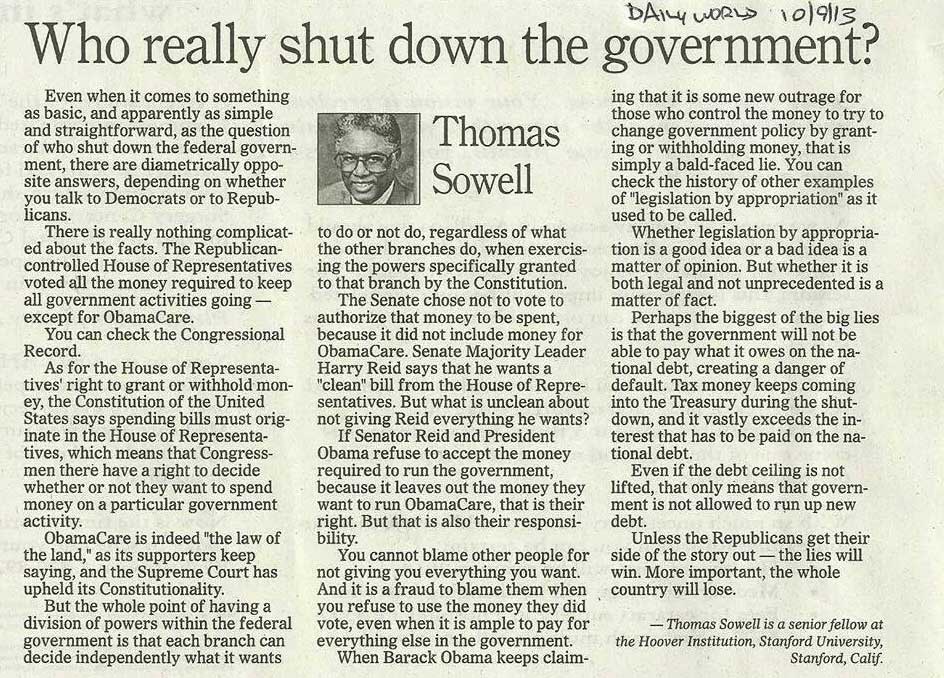
Congressional Blame Game from Thomas Sowell

Yes, if the media’s obsession with the congressional blame game is what counts. However, delegating blame is not a solution to the fundamental problems of equity in health care, a functioning government, and the sensible choice of operating within a budget vs. arbitrary cuts. Sequestration, shutdown, and threatened default are very much hardball politics, and it is no surprise that the opposing party responds in kind, especially as the end game becomes increasingly clear; that the right wing will be left holding the short end of the political stick.

The assertion that we can pay our debts without increasing the debt ceiling is mathematically feasible, but our interest obligations equal about 40% of the budget’s discretionary spending, or alternatively it is equivalent to approximately 1/3 of our Social Security obligations. The author fails to suggest which of these, and which categories within, he proposes to cut in order to continue servicing our interest obligations on the national debt. Sounds awfully like the economics analog to the neocon chicken hawks. Perhaps he’d have the cojones to put our money where his mouth is.

It is ironic that the author is on the payroll of the Hoover Institute, founded by the President who’s similar austerity policies greatly amplified the effects of the Great Depression. One can only hope that his next editorial elaborates on best practices in constructing Hoovervilles.

It’s not hyperbole to suggest that Hoovervilles would be on the horizon if we were to either cut Social Security by 1/3 or slash discretionary spending by 40%. How much does Sowell propose to cut from spending to continue paying interest? Find $245 billion a year that the Hooverites feel comfortable cutting and that won’t have dreadful consequences for millions of Americans. Hard choices, eh?…